
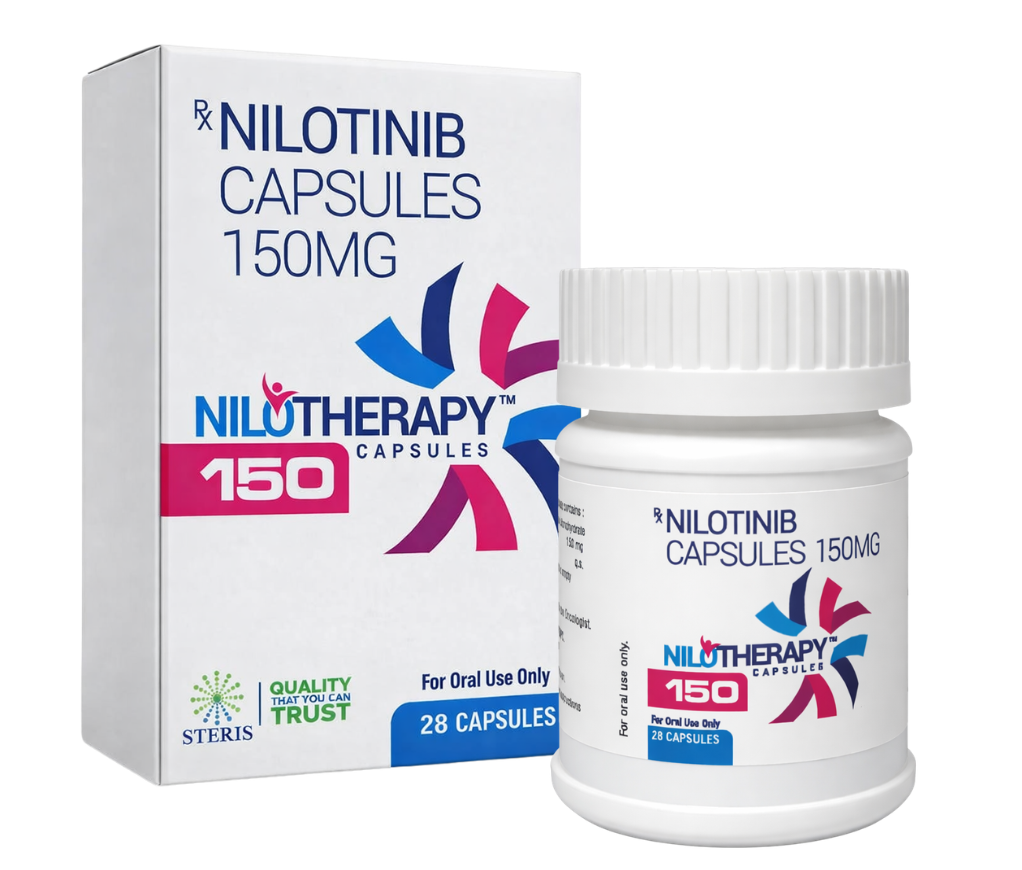
Nilotinib (150 mg), marketed under the brand name NILOTHERAPY 150, is a targeted anticancer medication primarily used in the treatment of certain types of blood cancer. It belongs to a class of drugs known as tyrosine kinase inhibitors (TKIs), which work by blocking specific proteins responsible for the growth and multiplication of cancer cells. This precision-based mechanism allows it to slow down or stop disease progression more effectively compared to traditional chemotherapy in certain conditions.
NILOTHERAPY 150 is commonly prescribed for patients diagnosed with chronic myeloid leukemia (CML), particularly those in the chronic or accelerated phases of the disease. It is often used when patients are newly diagnosed or when other treatments have not produced the desired response. By specifically targeting abnormal proteins produced by cancer cells, this medication helps in controlling the disease while minimizing damage to healthy cells.
With advancements in oncology, targeted therapies like Nilotinib have significantly improved survival rates and quality of life for many patients. However, like all medications, it requires proper medical supervision, adherence to dosage, and awareness of potential side effects.
Uses
NILOTHERAPY 150 (Nilotinib 150 mg) is primarily used in the treatment of:
1. Chronic Myeloid Leukemia (CML)
This medication is mainly prescribed for patients with Philadelphia chromosome-positive (Ph+) CML. It is effective in both newly diagnosed patients and those who are resistant or intolerant to prior therapies such as imatinib.
2. Accelerated Phase CML
In more advanced stages of CML, where the disease progresses rapidly, Nilotinib helps control abnormal cell growth and delay further progression.
3. Resistant or Intolerant Cases
For patients who do not respond well to first-line treatments or experience severe side effects, NILOTHERAPY 150 serves as an effective alternative option.
4. Long-Term Disease Management
Nilotinib is often used as part of long-term therapy to maintain remission and prevent relapse in patients who have achieved disease control.
Benefits
NILOTHERAPY 150 offers several important benefits, especially for patients battling chronic myeloid leukemia:
Targeted Action
Unlike conventional chemotherapy, Nilotinib specifically targets cancer cells by inhibiting the BCR-ABL tyrosine kinase protein. This leads to more precise treatment with reduced damage to normal cells.
Improved Treatment Response
Clinical studies have shown that patients treated with Nilotinib often achieve faster and deeper molecular responses compared to some older therapies.
Reduced Disease Progression
By blocking the growth signals of cancer cells, NILOTHERAPY 150 helps slow down or stop disease progression, particularly in early stages.
Oral Administration
The medication is taken orally, making it more convenient compared to intravenous treatments, allowing patients to maintain a better quality of life.
Long-Term Disease Control
With consistent use under medical supervision, Nilotinib can help maintain remission and reduce the risk of relapse.
Dosage
The dosage of NILOTHERAPY 150 must always be determined by a qualified healthcare professional based on the patient’s condition, body weight, and response to treatment.
Standard Dosage
Typically, the recommended dose is 300 mg to 400 mg twice daily, depending on the stage of the disease and treatment history.
Since NILOTHERAPY 150 contains 150 mg per capsule, patients may be instructed to take two capsules per dose.
Administration Guidelines
Take the medication on an empty stomach, at least 2 hours after eating and avoid eating for at least 1 hour after taking it.
Swallow the capsule whole with water; do not crush or chew.
Maintain a consistent dosing schedule, ideally 12 hours apart.
Missed Dose
If a dose is missed, skip it and take the next dose at the scheduled time.
Do not double the dose to compensate for the missed one.
Duration of Treatment
Treatment is usually long-term and may continue for several months or years depending on the patient’s response.
Always follow your doctor’s instructions carefully and never adjust the dose without consulting a healthcare provider.
Side Effects
Like all medications, NILOTHERAPY 150 may cause side effects. While some patients experience mild symptoms, others may develop more serious reactions.
Common Side Effects
Nausea and vomiting
Fatigue or weakness
Headache
Constipation or diarrhea
Rash or itching
Moderate Side Effects
Muscle or joint pain
Abdominal discomfort
Loss of appetite
Hair thinning
Serious Side Effects
Irregular heartbeat (QT prolongation)
Liver dysfunction (elevated liver enzymes)
Pancreatitis
Severe fluid retention
Low blood cell counts (anemia, neutropenia)
When to Seek Medical Help
Contact your doctor immediately if you experience:
Chest pain or irregular heartbeat
Severe abdominal pain
Yellowing of skin or eyes
Unusual bleeding or bruising
Persistent fever or infections
Early detection and management of side effects can significantly reduce complications.
Precautions and Warning
Before starting NILOTHERAPY 150, it is important to consider the following precautions:
Medical History
Inform your doctor if you have:
Heart conditions, especially arrhythmias
Liver or kidney disease
Pancreatitis
Electrolyte imbalances
Drug Interactions
Nilotinib may interact with other medications, including:
Antifungal drugs
Antibiotics
Heart rhythm medications
Herbal supplements like St. John’s Wort
Always provide a complete list of medications you are currently taking.
Pregnancy and Breastfeeding
This medication is not recommended during pregnancy as it may harm the unborn baby.
Breastfeeding should be avoided during treatment.
Food Interactions
Avoid grapefruit and grapefruit juice, as they can increase the drug’s concentration in the blood and lead to toxicity.
Cardiac Monitoring
Regular ECG monitoring may be required to check heart rhythm.
Electrolyte levels (potassium, magnesium) should also be monitored.
Blood Tests
Routine blood tests are necessary to monitor:
Blood cell counts
Liver function
Pancreatic enzymes
Driving and Machinery
If you experience dizziness or fatigue, avoid driving or operating heavy machinery.
Adherence to Treatment
Skipping doses or stopping treatment without medical advice may lead to disease progression or resistance.
Conclusion
NILOTHERAPY 150, containing Nilotinib 150 mg, represents a significant advancement in the treatment of chronic myeloid leukemia. Its targeted mechanism of action allows for more effective disease control while minimizing damage to healthy cells. With benefits such as improved response rates, oral administration, and long-term disease management, it has become a preferred option for many patients and healthcare providers.
However, like any potent medication, it requires careful usage under strict medical supervision. Understanding the correct dosage, potential side effects, and necessary precautions is essential for achieving optimal treatment outcomes. Regular monitoring and adherence to prescribed therapy play a crucial role in ensuring safety and effectiveness.
If you or a loved one has been prescribed NILOTHERAPY 150, maintaining open communication with your healthcare provider and following all medical guidelines can help maximize its benefits while minimizing risks.