
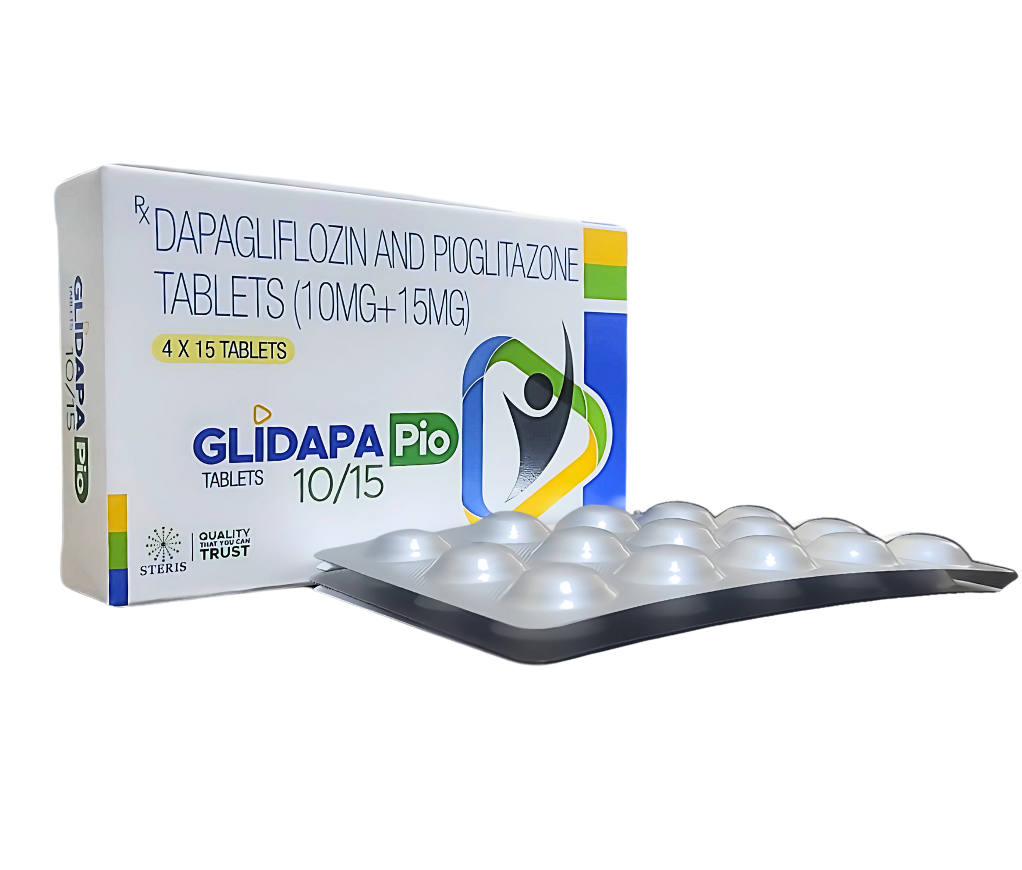
Dapagliflozin and pioglitazone
GLIDAPA PIO is a combination oral antidiabetic medication formulated with Dapagliflozin 10mg and Pioglitazone 15mg, designed to support effective blood sugar control in individuals with Type 2 Diabetes Mellitus. This advanced dual-action therapy works by improving insulin sensitivity while also helping the body remove excess glucose through urine. GLIDAPA PIO is commonly prescribed when diet, exercise, or single-drug therapy alone is not sufficient to maintain optimal glycemic control.
The combination of dapagliflozin, a sodium-glucose co-transporter 2 (SGLT2) inhibitor, and pioglitazone, a thiazolidinedione, offers a complementary mechanism of action. Together, they help reduce blood glucose levels, enhance insulin efficiency, and support long-term diabetes management. GLIDAPA PIO is widely used under medical supervision as part of a comprehensive diabetes care plan.
Uses of GLIDAPA PIO
GLIDAPA PIO tablets are primarily used for the management of Type 2 Diabetes Mellitus in adults. It is prescribed to patients whose blood sugar levels are not adequately controlled with lifestyle modifications or monotherapy.
Key uses include:
Management of high blood glucose levels in Type 2 diabetes
Improvement of insulin sensitivity in insulin-resistant patients
Support for better glycemic control when used alongside diet and exercise
Reduction of fasting and post-prandial blood sugar levels
Prevention of long-term diabetes-related complications when used consistently
GLIDAPA PIO is not indicated for Type 1 diabetes or diabetic ketoacidosis and should only be taken as prescribed by a healthcare professional.
Benefits of GLIDAPA PIO
GLIDAPA PIO offers multiple benefits due to its dual-drug formulation, making it a valuable option in diabetes management.
1. Dual Mechanism of Action
Dapagliflozin works by blocking glucose reabsorption in the kidneys, allowing excess sugar to be excreted through urine. Pioglitazone enhances the body’s sensitivity to insulin, enabling better glucose utilization by muscles and fat tissues.
2. Effective Blood Sugar Control
The combined action helps lower both fasting and post-meal blood glucose levels, leading to improved HbA1c outcomes over time.
3. Improved Insulin Sensitivity
Pioglitazone addresses insulin resistance, one of the core problems in Type 2 diabetes, making insulin more effective in regulating blood sugar.
4. Weight-Neutral or Modest Weight Effect
Unlike some antidiabetic medicines, GLIDAPA PIO may have a relatively balanced impact on body weight when used under medical guidance.
5. Reduced Risk of Diabetes Complications
By maintaining stable blood glucose levels, GLIDAPA PIO helps lower the risk of long-term complications such as nerve damage, kidney issues, and cardiovascular problems.
6. Once-Daily Convenience
The convenient tablet form improves treatment adherence, making long-term diabetes management easier for patients.
Dosage
The dosage of GLIDAPA PIO should always be determined by a qualified healthcare provider based on the patient’s medical condition, blood glucose levels, and treatment response.
General dosage guidelines include:
Typically taken once daily, with or without food
Should be taken at the same time each day for best results
Tablets should be swallowed whole with water
Dosage adjustments may be required based on kidney function, age, or concurrent medications
Patients should never change the dose or stop taking GLIDAPA PIO without consulting their doctor. Regular blood sugar monitoring is recommended to assess treatment effectiveness.
Side Effects
Like all medicines, GLIDAPA PIO may cause side effects, although not everyone experiences them. Most side effects are mild and temporary.
Common Side Effects:
Increased urination
Mild dizziness or headache
Thirst or dry mouth
Weight changes
Fatigue
Less Common Side Effects:
Urinary tract infections
Genital infections
Swelling of ankles or feet
Muscle pain
Rare but Serious Side Effects:
Low blood sugar (especially when used with other antidiabetic medicines)
Fluid retention
Shortness of breath
Signs of liver problems
If any unusual or severe symptoms occur, medical attention should be sought immediately.
Precautions and Warning
Before starting GLIDAPA PIO, patients should inform their doctor about their complete medical history. Certain precautions must be followed to ensure safe use.
Important Precautions:
Not recommended for patients with severe kidney or liver disease
Use with caution in patients with heart conditions or fluid retention
Regular monitoring of kidney function and liver enzymes may be requiredNot suitable for pregnant or breastfeeding women unless advised by a doctor
Adequate hydration is important to avoid dehydration
Warnings:
GLIDAPA PIO is not a substitute for insulin
Should not be used in Type 1 diabetes
Alcohol consumption should be limited, as it may increase the risk of side effects
Patients should follow a balanced diet and exercise routine alongside medication
Always follow your healthcare provider’s advice and attend regular follow-up appointments.
Conclusion
GLIDAPA PIO Dapagliflozin 10mg and Pioglitazone 15mg Tablets is an effective and well-balanced combination therapy for managing Type 2 Diabetes Mellitus. By combining two complementary mechanisms of action, it helps improve insulin sensitivity, reduce excess glucose, and maintain stable blood sugar levels over time. When used as part of a comprehensive diabetes management plan that includes proper diet, exercise, and regular monitoring, GLIDAPA PIO can significantly improve quality of life and reduce the risk of long-term complications.